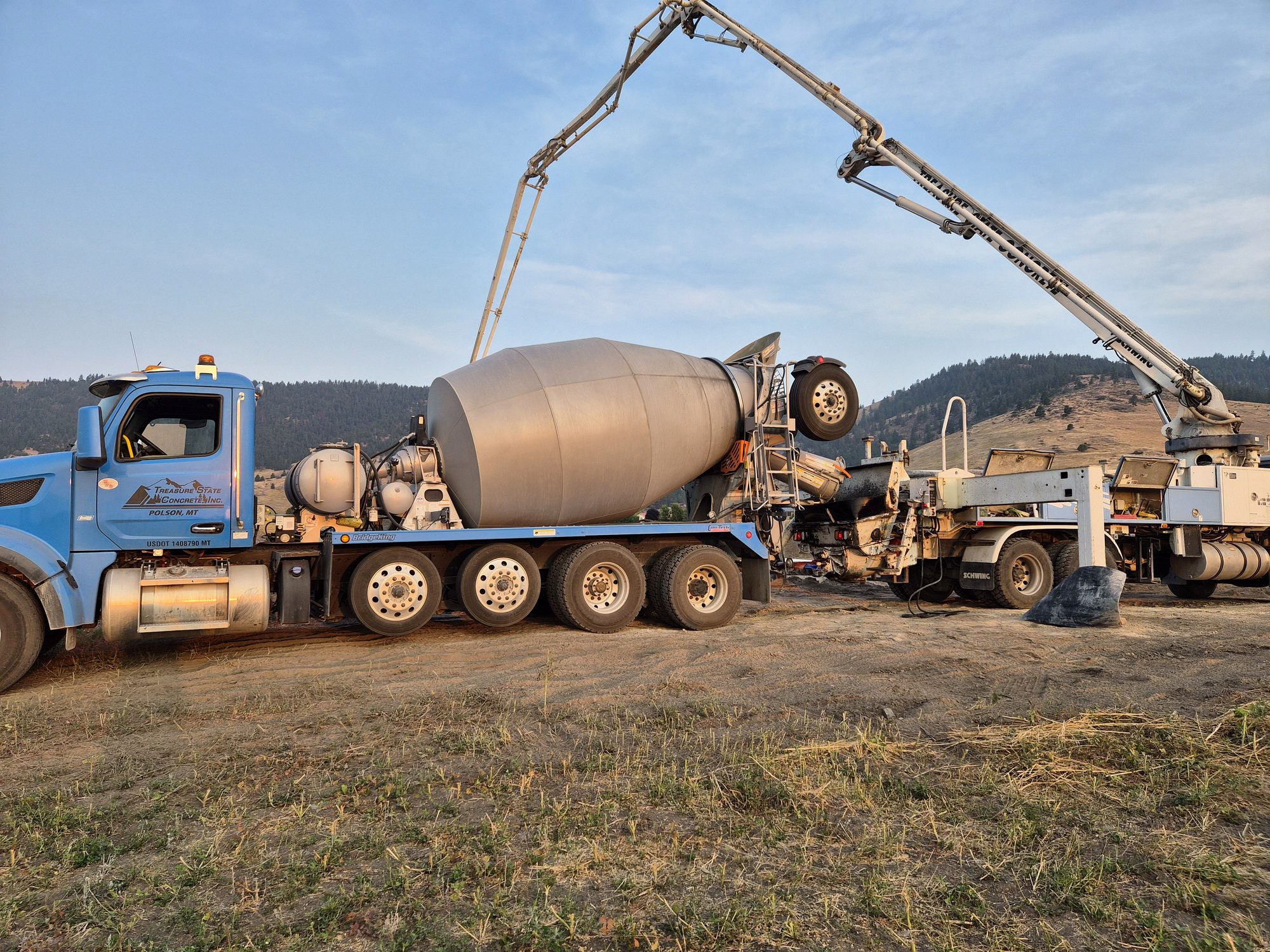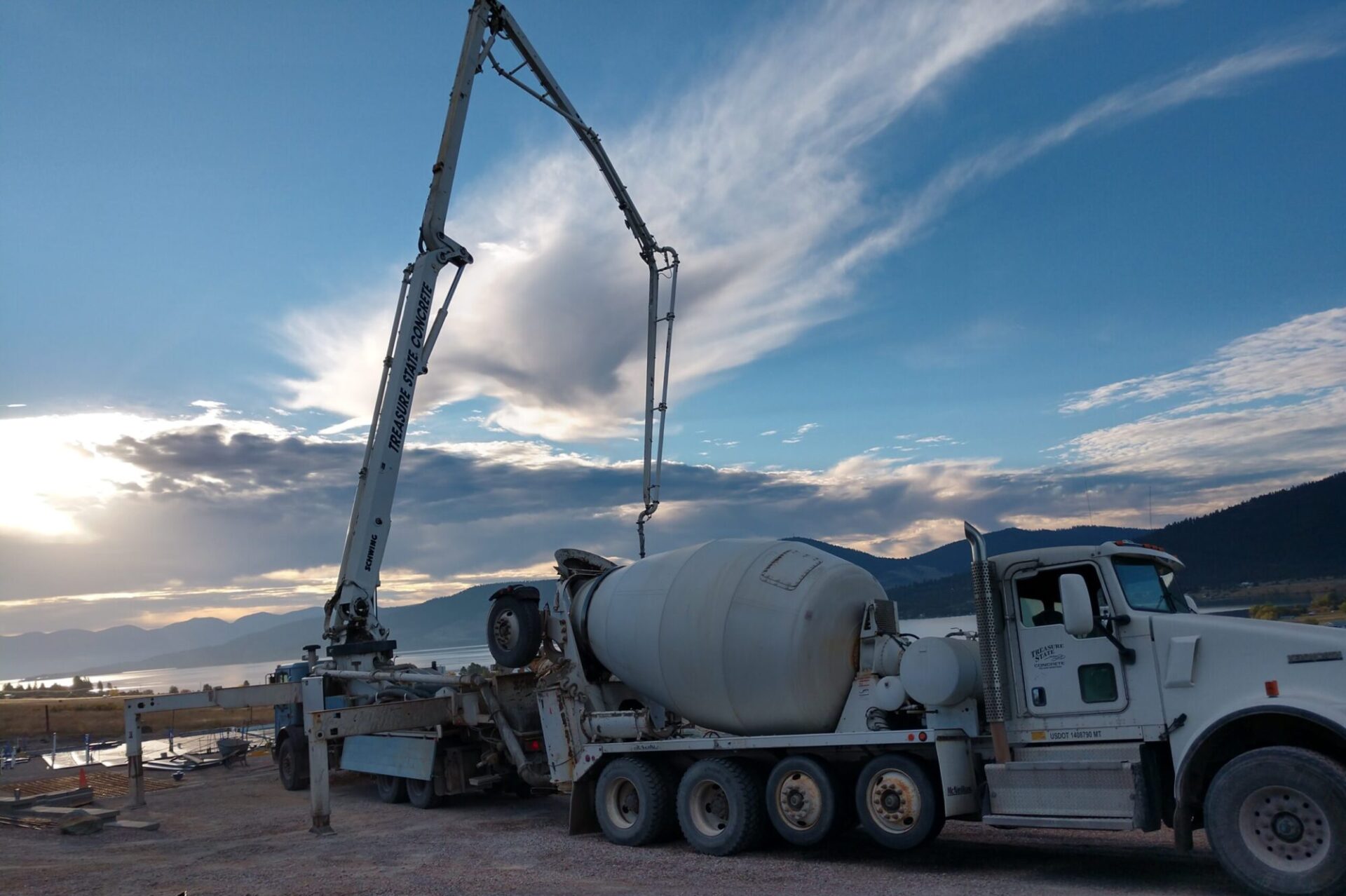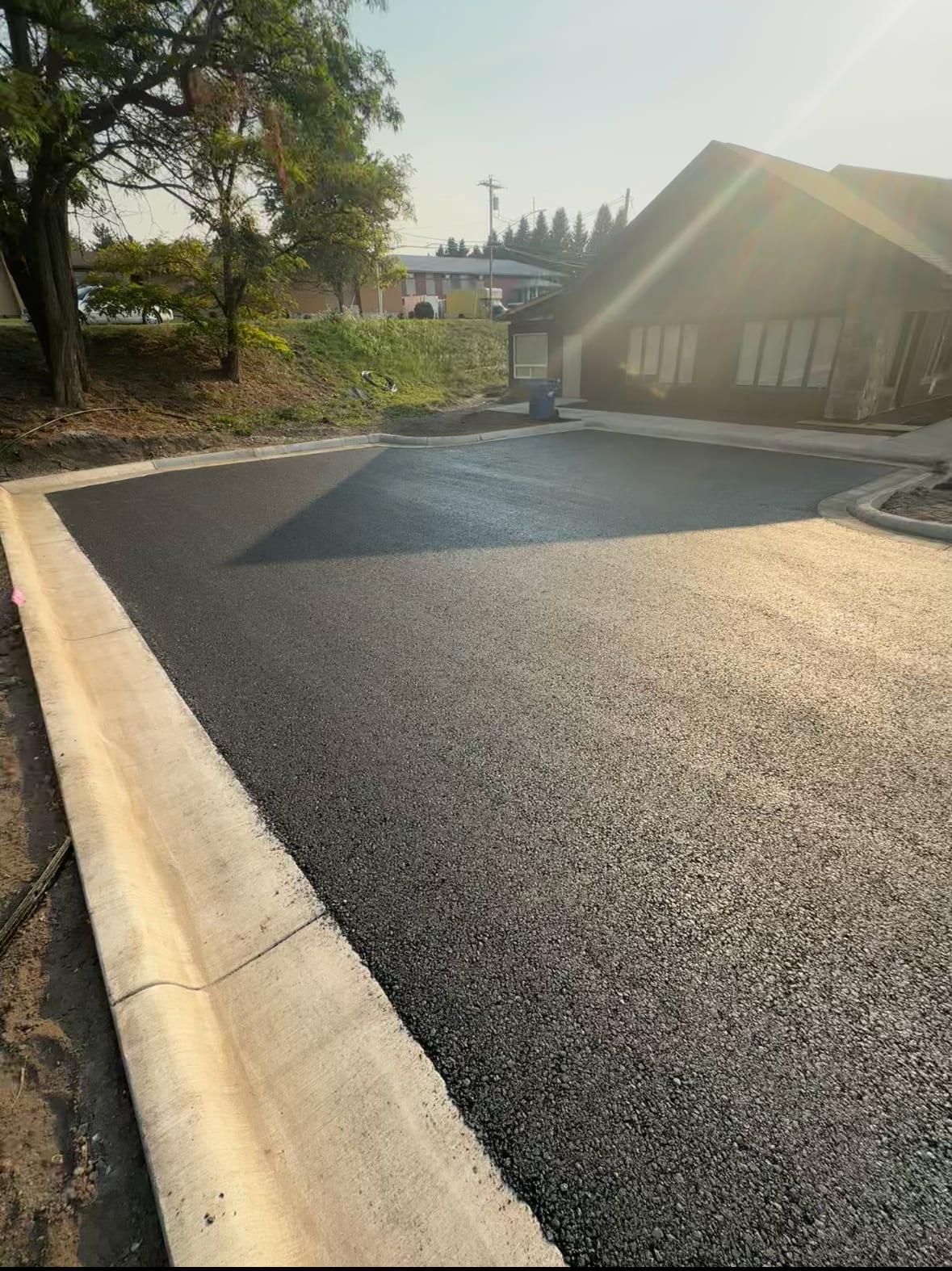
Support the slab
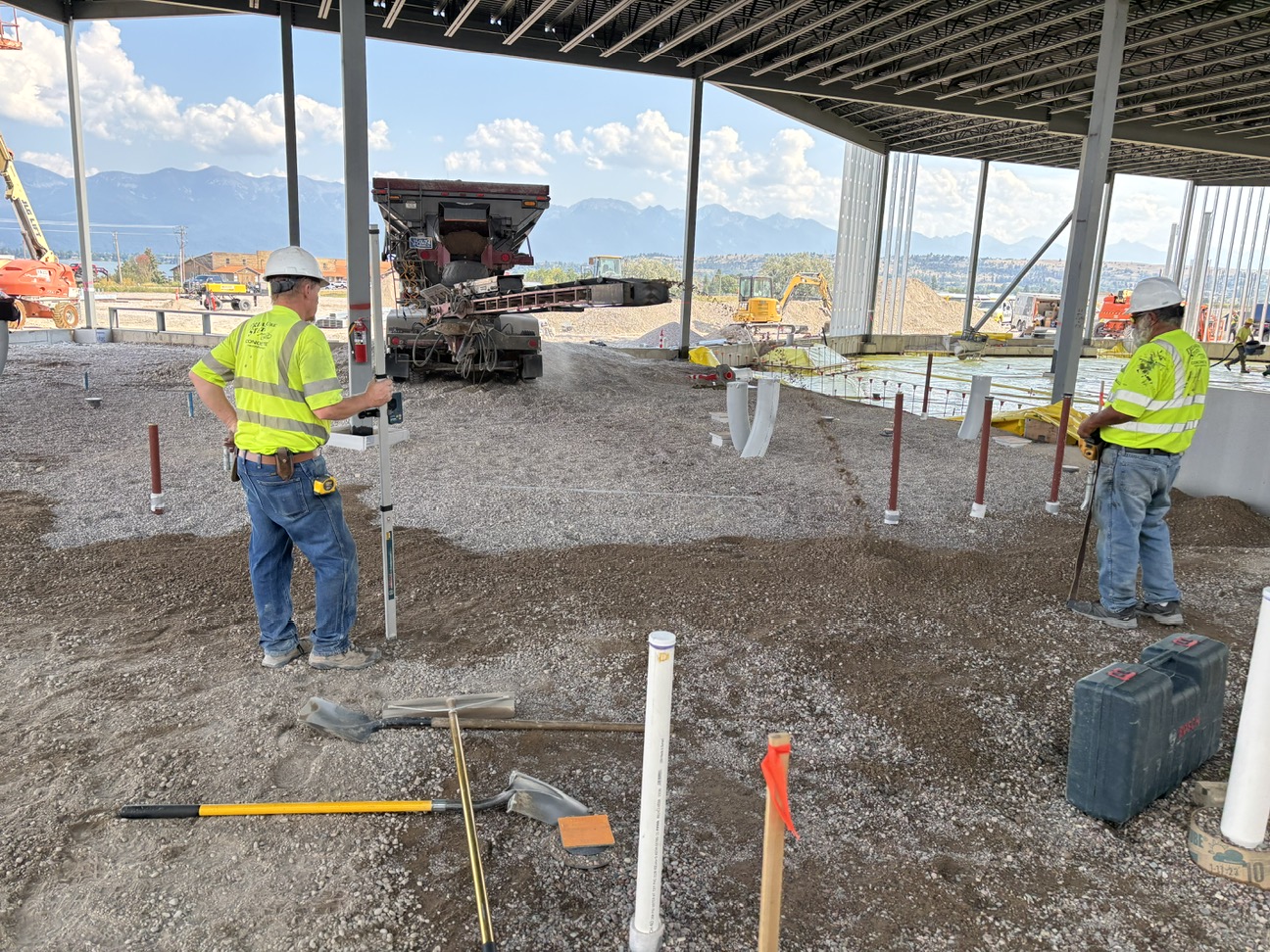
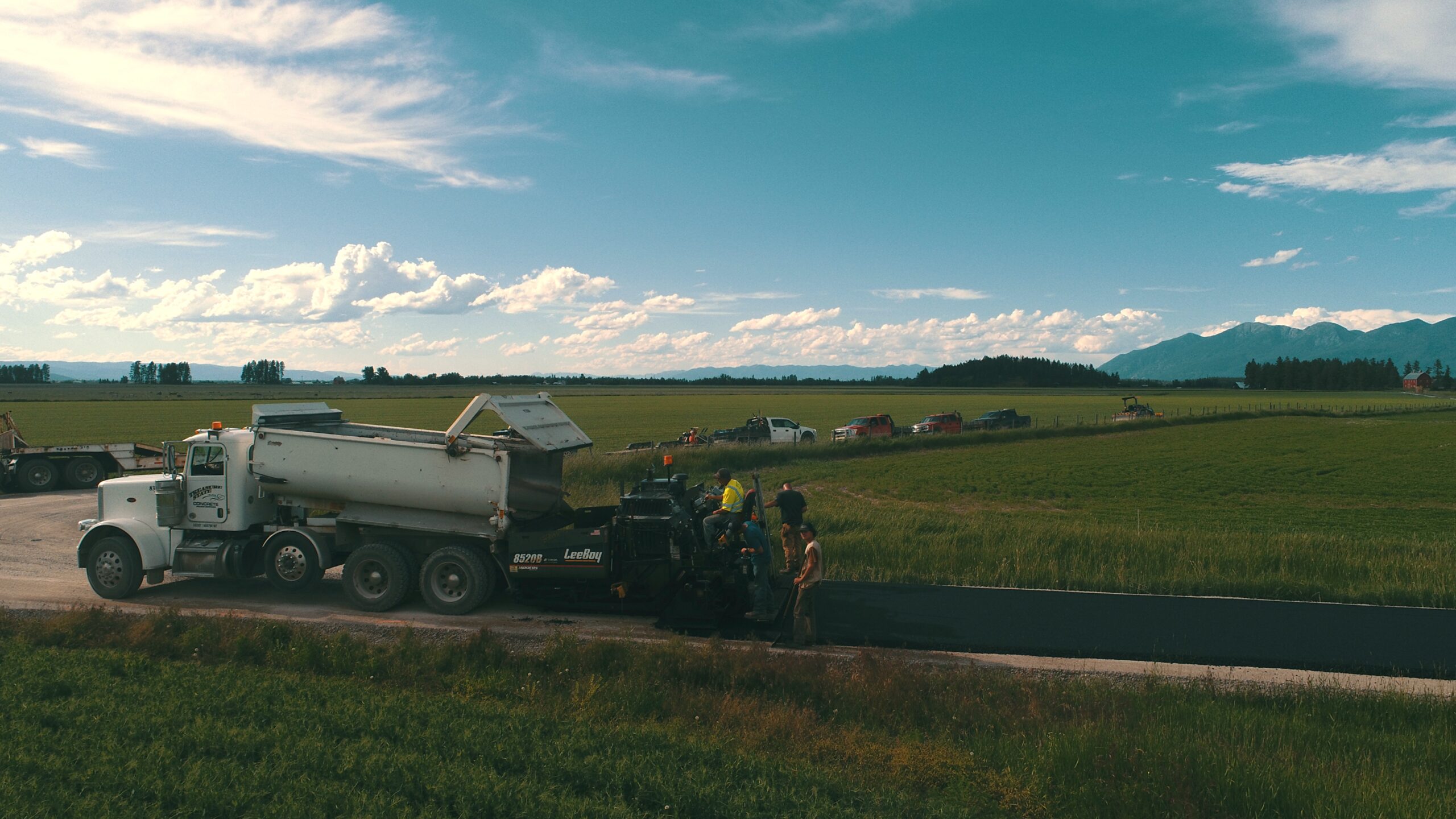
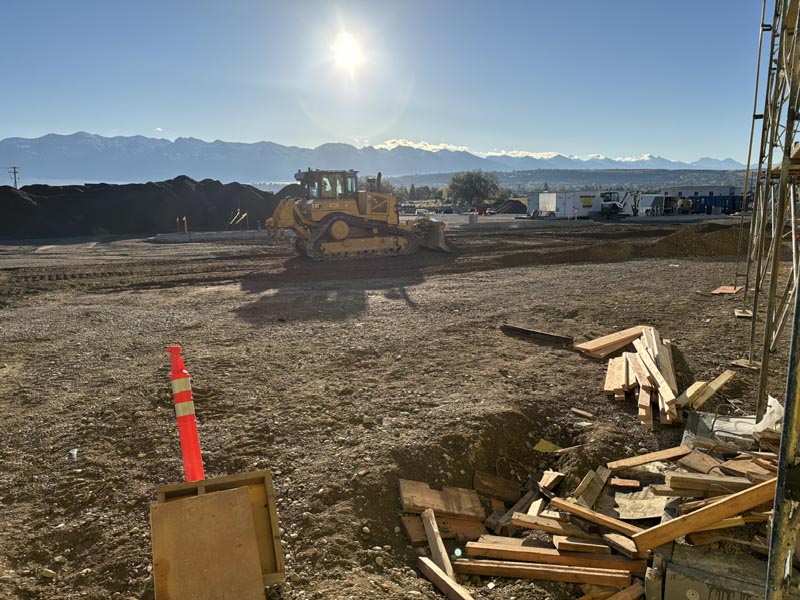
Subgrade, gravel base, and drainage come first.
Start with the approved design and expose what is actually in the ground. Uniform support matters more than simply making the surface look flat.
- Confirm permits, setbacks, drainage requirements, utility locations, and an approved design before excavation.
- Remove sod, roots, topsoil, loose fill, mud, and soft or pumping areas; do not build over organics or hidden weak spots.
- Prepare uniform support and compact the subgrade and base in appropriate lifts with suitable equipment.
- Use the specified gravel or aggregate base and maintain positive drainage away from buildings and finished concrete.
Do not trap water beside foundations or beneath flatwork. Coordinate finish elevations, slopes, downspouts, swales, edge support, and any required drains before forms are set. A geotechnical or design professional should address expansive, saturated, frozen, filled, or otherwise questionable soils.
Hold the geometry
Forms, reinforcement, and joints need a drawing not a guess.
Brace forms so they stay at line, grade, and elevation under the weight and pressure of fresh concrete. Install reinforcing steel, welded wire reinforcement, dowels, anchors, vapor retarders, isolation material, and embeds where the approved design requires them. Reinforcement must be supported at the intended depth; leaving it on the ground and hoping to pull it up during placement does not provide reliable positioning.
Plan contraction, isolation, and construction joints before the pour. Joints provide intentional locations for movement; reinforcement can help hold cracks tight, but it does not make concrete incapable of cracking.
Read NRMCA CIP 6: Joints in Concrete Slabs on Grade →
Protect the placement window
Order enough and reserve the delivery before pour day.
Measure every section using the actual formed dimensions and depth. Include thickened edges, grade beams, steps, piers, and other shape changes. Use the calculators for an early estimate, then discuss irregular geometry, expected waste, minimum loads, balance loads, and the final order quantity with dispatch. Do not order only the mathematical bare minimum and assume forms, excavation, and yield will be exact.
Project address, approved mix requirements, quantity, placement date, placement method, truck access, desired slump, exposure, color, admixture needs, crew capacity, and an honest unloading pace.
Reserve the desired date early. Before confirming truck spacing, know how quickly the crew can place, strike off, edge, joint, and protect the concrete. Trucks arriving faster than the crew can work create pressure and waiting time; spacing them too far apart can create cold joints and finish variation. Changes are subject to plant, truck, pump, and schedule availability.
- Crew size and assigned roles match the placement size, access, weather, and chosen finish.
- Forms, reinforcement, joints, tools, screeds, floats, edging tools, sprayer, and curing materials are ready. For footing work, ask whether AccuFooting braces fit the approved plan.
- A contained washdown area on private property has been approved by the property owner, or a temporary concrete washout tub has been arranged with Treasure State Concrete, Inc. Public property washdown is not permitted.
- The truck route is firm, clear, and free of low branches, overhead lines, soft shoulders, buried hazards, and tight turns.
- Chute, pump, buggy, conveyor, or wheelbarrow placement is arranged before the first truck arrives.
- Truck spacing and unloading pace have been discussed so fresh concrete does not outrun the crew or leave a cold joint.
Type IL concrete
Different fresh behavior calls for attention not alarm.
Portland limestone cement, commonly called PLC or Type IL, is an established cement covered by ASTM C595/AASHTO M 240. It is not inherently defective, and using Type IL does not guarantee more cracking than concrete made with Type I or Type I/II cement. Performance depends on the complete mixture, design, support, weather, placement, finishing, and curing.
Fresh properties can differ. Depending on the cement and mix, Type IL concrete may show a change in water demand, bleeding, or set timing. When surface evaporation outpaces the moisture supplied by bleed water, the surface can crust while the concrete below remains plastic, increasing the risk of plastic shrinkage cracks and finishing problems. Wind, dry air, direct sun, and temperature can matter as much as the thermometer.
Ask Treasure State Concrete, Inc. which producer selected Euclid admixtures may be appropriate for the approved mix, weather, travel time, placement rate, and finish. Product selection and dosage belong with the concrete producer and approved specification not an improvised jobsite recipe.
EUCOBAR is an evaporation retardant and finishing aid that can help limit rapid surface moisture loss before set. It is not a replacement for final curing. Use only as directed by the manufacturer and as part of an agreed placement plan.
Follow the concrete
Place efficiently. Finish the condition in front of you.
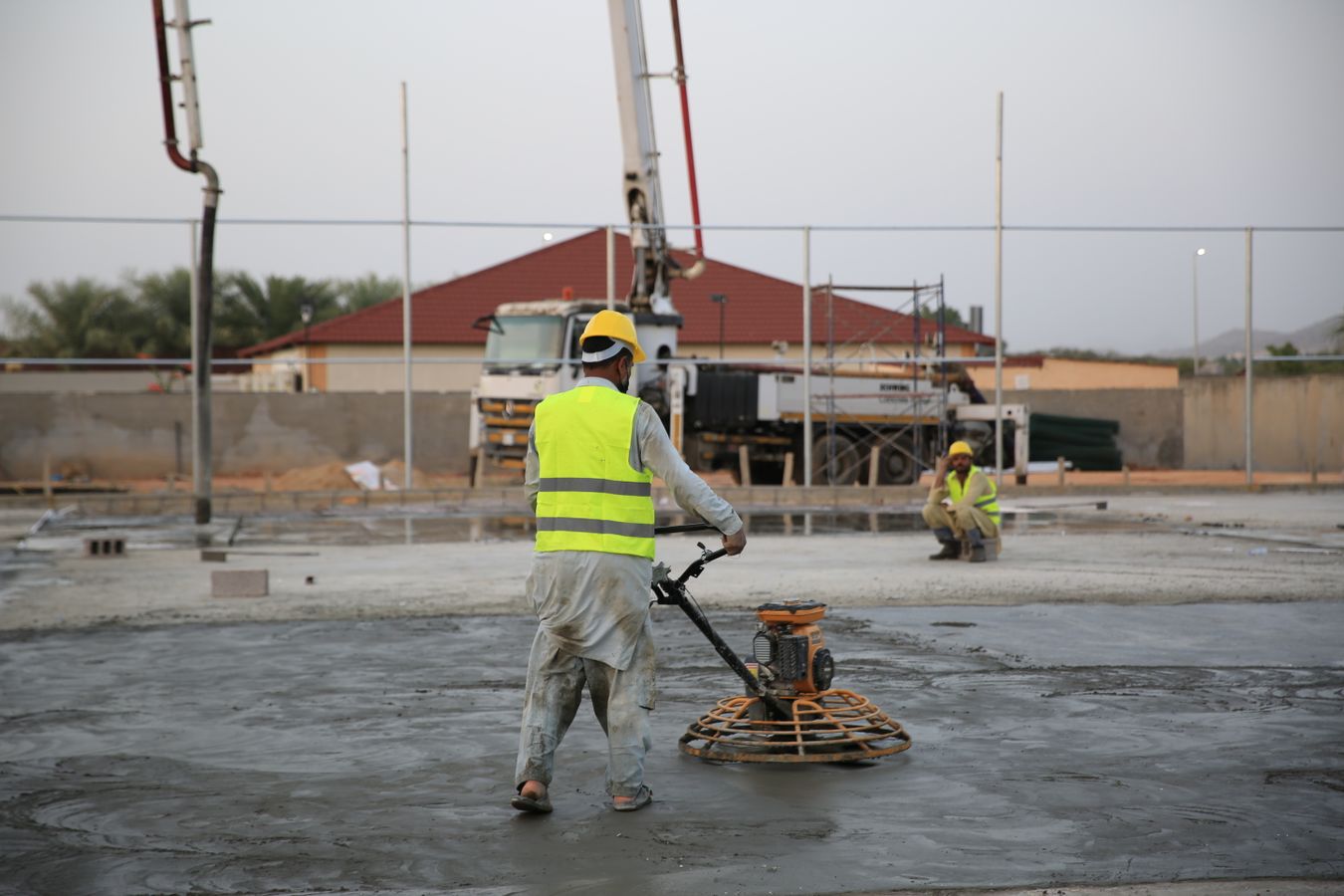
The crew should be ready before the mixer arrives and should adjust to the actual concrete and weather not a fixed clock. An experienced finisher recognizes bleed water, surface crusting, setting, air entrainment, edges, joint timing, and when a surface is ready for the next operation.
Once cement and water are combined in the batch, hydration begins. Concrete continues moving toward set and hardening during travel, discharge, and ordinary waiting; keeping the drum turning does not pause that chemical reaction or keep the load workable indefinitely. There is no guaranteed fixed working time. The mixture, admixtures, concrete and air temperatures, sun, wind, humidity, travel time, and placement conditions all affect how quickly the concrete changes.
For slabs and flatwork, discharge concrete near its final position only as fast as the crew can progressively place, spread, consolidate, and strike off or screed it. Work forward from one end with fresh concrete against the previously placed section. Do not dump the entire placement first and plan to spread and screed it afterward.
Do
- For slabs and flatwork, discharge near final position only as fast as the crew can progressively place, spread, consolidate, and strike off or screed.
- Float and finish according to the actual surface condition, weather, approved specification, and intended texture.
- Watch wind, sun, temperature, humidity, concrete temperature, and the rate at which surface moisture is disappearing.
- Start the approved curing method promptly after final finishing and protect edges and corners from early traffic.
Do not
- Do not sprinkle water or dry cement on the surface to make finishing appear easier.
- Do not finish bleed water into the slab or trap water and air beneath a prematurely closed surface.
- Do not add jobsite water, color, admixture, or another ingredient without authorization and documentation.
- Do not keep working the surface after it has reached the intended finish; overworking can damage appearance and durability.
Strikeoff or screeding establishes grade as placement advances. Floating, troweling, edging, jointing, and brooming are later finishing operations. After strikeoff, wait until bleeding has stopped and the water sheen is gone before subsequent finishing; this controlled wait is different from leaving concrete unplaced while the load continues toward set.
Never add water casually to make placement or finishing easier. Any allowed adjustment must stay within the approved mixture and order requirements and be coordinated with the driver and dispatch. Unauthorized additions can affect strength, durability, air content, color, set, and surface quality.
Keep the moisture working
Curing starts when finishing ends.
Curing maintains the moisture and temperature needed for the concrete to develop its intended strength, durability, and surface quality. Select the curing method before pour day and have every material on site. Protect fresh concrete from rapid drying, freezing, overheating, rain damage, pets, footprints, equipment, deicing chemicals, and early vehicle loads.
Ask Treasure State Concrete, Inc. about Euclid curing products appropriate for the approved mix, weather, desired appearance, and future coatings or flooring. Compatibility matters: some curing materials can affect later stains, sealers, adhesives, or floor coverings. Follow the selected product data sheet; EUCOBAR controls evaporation before set but is not the final curing method.
Decide before dispatch
Color and decorative concrete are complete systems.
Choose integral color, color hardener, release, stamping pattern, texture, joint layout, curing, stain, and sealer as a coordinated system. Confirm the exact product and color before ordering; use current physical samples or a representative mockup when appearance is important. Printed and on screen charts are only a guide.
Control what you can
Keep mix, slump, batch to batch water, placement method, finishing timing, curing, and sealer application as consistent as practical. Weather, base moisture, finishing, curing, cement, aggregate, and viewing conditions can all affect final appearance.
Do not improvise additions
Do not add loose pigment, calcium chloride, water, admixtures, release, or other material to the mixer or slab unless it is part of the approved system and coordinated with the producer. Record color and product selections for every load.
Know the limit of a DIY pour
Hire an experienced contractor before the risk outruns the savings.
Consider professional help for structural work, foundations, suspended slabs, retaining conditions, steep or inaccessible sites, uncertain soil, drainage problems, large placements, tight architectural tolerances, exposed or decorative finishes, pumping, cold or hot weather, and any project where a failed placement would be difficult to remove and replace.
A qualified concrete contractor brings crew depth, placement equipment, finishing judgment, weather contingencies, and a curing plan. The ready mix driver delivers concrete; the buyer remains responsible for site readiness, safe access, placement, finishing, curing, and protection unless a written agreement assigns those duties elsewhere.
If part of your project is outside the services Treasure State Concrete, Inc. provides or beyond what you want to tackle call us. We may be able to share contact information for local contractors who handle that type of work and help you find a sensible next call. Contractor contacts are shared as a courtesy, not as an endorsement or guarantee. You are responsible for confirming qualifications, any required licensing or registration, insurance, references, availability, pricing, scope, and contract terms directly with the contractor before hiring.
Call (406) 883-8061 for local contractor contacts →NRMCA Concrete In Practice offers homeowner friendly technical sheets covering cracking, joints, weather, finishing, admixtures, water, ordering, curing, and PLC.