
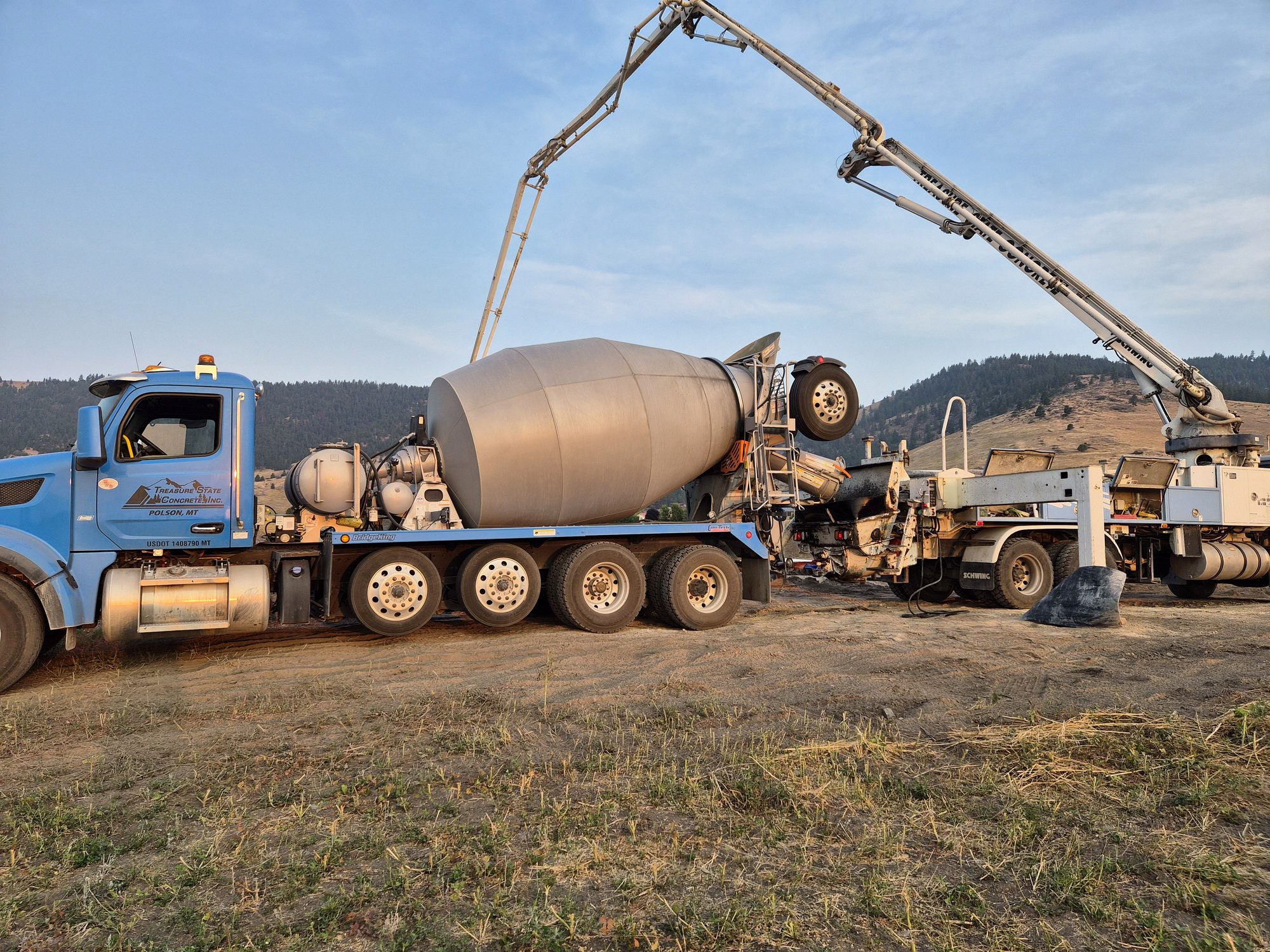
Concrete needs water so cement can hydrate and the mixture can be placed. The problem is not water itself it is water added beyond the amount allowed by the mixture design. Unapproved extra water may make concrete easier to move for a few minutes, but it changes the concrete that remains after the water leaves.
If a project needs more slump, better pumpability, or easier placement, discuss it with Treasure State Concrete, Inc. before the concrete is batched. A properly selected water reducing admixture often called a plasticizer may provide the needed workability without simply watering down the mix.
Any adjustment must be authorized, measured, recorded, and incorporated using the concrete producer's procedure. Admixtures are concentrated products whose dosage, compatibility, timing, and mixing can affect the entire load. Instructions from the project specifications, engineer, and producer take priority over this general guide.
Water is part of the design
More water is not automatically better concrete.
Concrete mixtures are proportioned to balance fresh concrete workability with the strength and durability needed after hardening. Adding water beyond the approved limit raises the water to cementitious materials ratio. The National Ready Mixed Concrete Association ordering guide explains that excessive water can cause segregation, delay setting, increase cracking potential, and reduce strength and durability.
- Lower compressive strength and durability
- Greater permeability after the concrete hardens
- More bleeding, segregation, and delayed setting
- Higher potential for shrinkage and cracking
- A weaker surface that may be more vulnerable to dusting, scaling, and wear
The effect depends on the mixture, exposure, and amount added. There is no responsible one size fits all promise about how much strength a particular gallon of water will remove.
Consistency is not water content
Slump helps describe fresh concrete, but it is not a water gauge.
Slump is a measure of fresh concrete consistency. It can help indicate how readily a particular load may place, but it does not by itself reveal the amount of water in the mixture or fully describe workability.
Two mixtures can have similar slump while using different proportions and admixtures. Concrete containing a water reducer can have higher slump without the higher water content created by simply watering up a load. The required consistency and placement method should be discussed when ordering not guessed after the truck arrives.
Workability without excess water
A plasticizer helps the available water work more efficiently.
Water reducing admixtures disperse cement particles. Depending on the mixture and project, they can maintain a selected slump with less water or increase slump and workability without adding the same amount of water. The NRMCA chemical admixtures guide describes normal-, mid-, and high range water reducers. High range water reducers are commonly called superplasticizers.
- Improve workability and pumpability for an appropriate mixture
- Help concrete move around congested reinforcement
- Support lower permeability and higher strength mixtures
- Help manage slump retention or placement in warm weather when properly selected
It does not replace stable subgrade, drainage, air entrainment when required, joints, consolidation, finishing, curing, weather protection, or a qualified placement crew.
The dose affects the whole load
The producer must select and control the admixture.
More admixture is not automatically better. Cement chemistry, Type IL cement, aggregates, air entrainment, temperature, haul time, pumping, desired slump, setting time, and other admixtures can all affect performance. ACI explains that admixtures of the same general type do not always perform identically and that material compatibility and temperature can change their effects.
Admixtures are normally dispensed in small, accurately measured quantities at a consistent point in the batching cycle. Do not pour a store bought plasticizer, water reducer, soap, or other chemical into the truck, pump, forms, or concrete.
Treasure State Concrete, Inc. can determine whether an appropriate Euclid Chemical admixture is available for a particular mixture and placement. For example, Euclid PLASTOL RX10 is a mid/high range water reducing and plasticizing admixture designed for workability retention and compatibility with Type IL cement. Product availability, suitability, and dosage must be confirmed by Treasure State Concrete, Inc. for the actual order; this example is not a recommendation for every project.
Measured and documented not improvised
A limited jobsite adjustment may be allowed under controlled conditions.
“Never add water” is too broad. NRMCA explains that ASTM C94 permits a controlled jobsite water addition when concrete is below the permitted slump and the addition will not exceed the mixing water or water cementitious ratio limit established for the load. Project specifications can be more restrictive.
- The producer or authorized representative must first determine whether water remains within the load's allowance.
- The adjustment should occur before a significant amount of concrete is discharged.
- Every addition must be measured and recorded on the delivery ticket.
- The purchaser's designated representative should sign or initial the ticket.
- NRMCA guidance calls for 30 mixer revolutions at mixing speed after jobsite water or admixture is added.
- Once the permitted slump or water limit is reached, no more water should be added.
Read the NRMCA jobsite addition of water guide for the industry procedure. A customer request for water beyond the permitted amount changes responsibility for the resulting concrete quality and may cause the load to fall outside the project requirements.
Protect the surface
Do not sprinkle water onto concrete to make finishing easier.
Water mixed into the load is not the only concern. NRMCA advises finishers never to sprinkle water or dry cement onto a slab to facilitate finishing. Finishing while bleed water remains, or working water into the surface, can contribute to dusting, scaling, crazing, delamination, and blisters.
Properly planned curing after finishing is different from watering down the fresh mixture or sprinkling water on the surface during finishing. Follow the selected curing method and the project professional's instructions.
Solve workability before batching
Give dispatch the placement facts before the truck arrives.
Do not try to solve an understaffed, delayed, or difficult placement by ordering concrete first and watering it down later. Plan the placement rate, crew, equipment, slump, and admixture needs with Treasure State Concrete, Inc. before batching.
- Project type, section thickness, specifications, and intended exposure
- Whether the concrete will be pumped and how far it must move
- Reinforcement congestion, forms, access, and placement method
- Expected haul, unloading, and placement time
- Available crew, equipment, weather plan, and requested placement rate
- Required slump, air, strength, maximum water cementitious ratio, finish, color, and other admixtures
Concrete contains natural materials and is affected by subgrade support, drainage, section thickness, reinforcement, weather, placement, finishing, curing, and loading. Proper mixture selection and controlled adjustments can reduce avoidable risks, but a water reducer cannot guarantee a crack free, uniform color, or maintenance free result.