
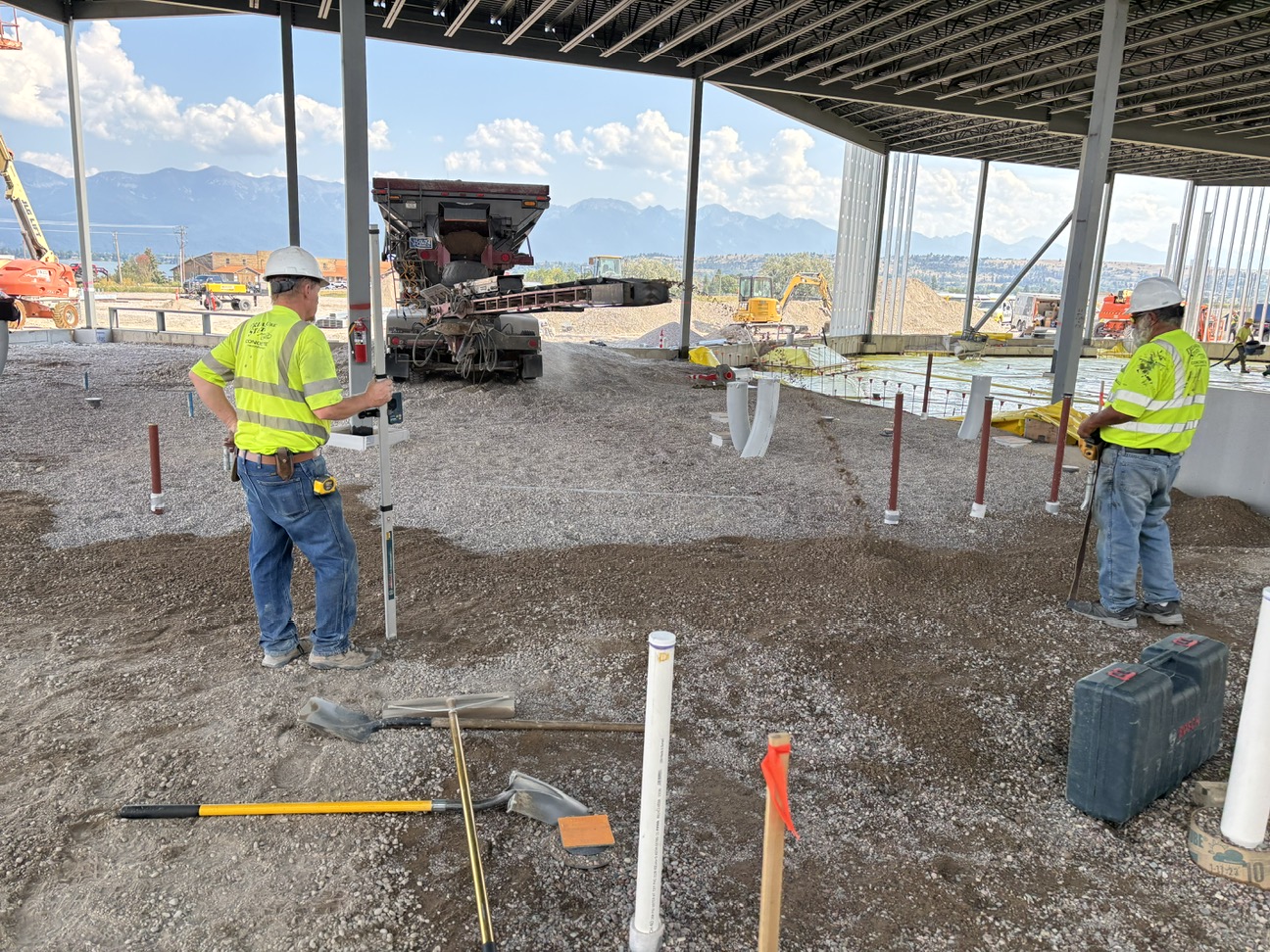
Material trucks are large, heavy, and affected by turns, grades, soft ground, overhead hazards, weather, and the room available to set up or unload. A useful delivery plan begins at the public road and follows the entire route to the intended discharge or staging area.
This guide is general education, not a site safety inspection or approval of access. The actual route, material, vehicle, weather, and conditions determine what is workable on delivery day.
01 · Start with the route
Walk from the public road to the unloading point.
Do not evaluate only the final pile or pour location. Look at every gate, turn, grade, crossing, shoulder, narrow section, and backing movement the truck may need to make. Identify a safe way for the vehicle to leave after unloading, too.
- Confirm the correct entrance, address, gate, and site contact.
- Check available width and turning room for the delivery vehicle.
- Look for steep grades, soft shoulders, drop offs, tight curves, and blind backing areas.
- Identify the competent adult who will serve as the required ground guide (spotter), walk the route together, and agree on clear hand signals with the driver.
- Keep children, pets, visitors, and unnecessary equipment away from the truck route.
- Share any seasonal road, neighborhood, gate, or timing restrictions before scheduling.
Provide one designated, competent adult ground guide whenever a Treasure State Concrete, Inc. truck leaves a maintained public road or moves, backs, unloads, spreads, or operates on the jobsite. Before movement, the ground guide and driver must agree on clear hand signals. The ground guide must remain visible in the driver's mirror and watch the truck and its path for people, vehicles, structures, utilities, overhead and concealed hazards, soft ground, and property that could be damaged.
The ground guide must keep people and traffic clear of the truck's path and blind spots and may not use a phone, wear headphones, or take on distracting or unrelated duties while guiding. If the driver loses visual contact, receives an unclear signal, or sees conflicting directions, the driver will stop until one clear communication path is restored.
02 · Ground and clearance
Account for truck weight above and below.
A surface that carries a pickup may not support a loaded material truck. Rain, thaw, snow, recent excavation, uncompacted fill, buried structures, septic systems, culverts, edges, and slopes can change the route's condition and capacity.
Look down
Identify soft ground, trenches, vaults, septic components, culverts, irrigation, landscaping, fresh fill, pavement edges, and known underground hazards along the route and setup area.
Look up and around
Check power lines, communication lines, branches, rooflines, signs, temporary structures, scaffolding, and other overhead or side clearances before the truck enters.
Tell dispatch about questionable access before delivery. If conditions are unsafe or do not suit the truck or requested unloading method, the route or delivery plan may need to change, and onsite spreading or access may be declined.
Read the dedicated ground guide, mixer truck blind spot, and hand signal guide before choosing the person who will guide the truck.
03 · Unloading plan
Prepare the place where the material will go.
Mark the intended unloading, pile, chute, pump setup, staging, or spreading area so the onsite contact can direct the driver. Make sure the planned location does not block the truck's exit or put people, utilities, structures, vehicles, or finished work at risk.
- Choose and mark the location. Clearly identify the unloading point and any areas the truck must avoid.
- Make room to work. Move vehicles, stored materials, tools, and unnecessary equipment out of the route and setup area.
- Prepare receiving equipment. Have the placement crew, loader, pump, forms, stockpile area, or other receiving operation ready.
- Control people and traffic. Assign one ground guide to communicate with the driver and keep everyone else clear of the truck and its blind spots.
- Plan concrete washdown and containment. For ready mix or pumping, prepare a contained washdown area on private property that the property owner has approved, or ask Treasure State Concrete, Inc. about a temporary washout tub before delivery. Washdown is not permitted on streets, shoulders, sidewalks, gutters, rights of way, storm drains, ditches, waterways, or other public property.
When Treasure State Concrete, Inc. agrees to place any delivered material by truck spreading or the Ultra 20 Stone Slinger, placement is approximate. Exact depth, width, location, grade, quantity distribution, compaction, or finished surface is not guaranteed. The driver may stop or decline spreading when access or conditions are unsafe.
04 · Customer direction
Understand the responsibility that comes with directing the truck.
The customer is responsible for providing and directing a reasonably safe route, access, setup, and unloading area. When a customer directs a Treasure State Concrete, Inc. truck off maintained public roads or within the project site, the current written acknowledgment, quote, delivery ticket, and sales terms explain how site condition and direction related risks and costs are handled.
Review those documents before delivery rather than waiting until the truck is onsite. The driver still evaluates the conditions presented at the time; customer direction does not turn an unsafe route into an acceptable one.
The ground guide's directions confirm that the requested path has been inspected and that known hazards and avoid areas have been disclosed. They do not guarantee perfect access, a damage free delivery, or that unseen or changing conditions will support the truck. The driver retains authority to stop, change, or refuse the requested movement.
Review and complete the material purchase acknowledgment before the order is finalized. The page is a plain language draft that Treasure State Concrete, Inc. should use alongside its current written transaction documents.
05 · Delivery day check
Recheck the site before the truck leaves the road.
- Route and unloading area remain firm, clear, and accessible.
- Weather has not changed the ground, visibility, or safe approach.
- Gates are open and overhead and side clearances remain unobstructed.
- Known utilities, structures, edges, and avoid areas are marked.
- The onsite contact is present, reachable, and understands the plan.
- The designated ground guide is present, understands the agreed signals, remains visible in the driver's mirror, and has no competing duties.
- Receiving crew and equipment are ready for the scheduled material.
- Children, pets, visitors, and unnecessary traffic are kept clear.